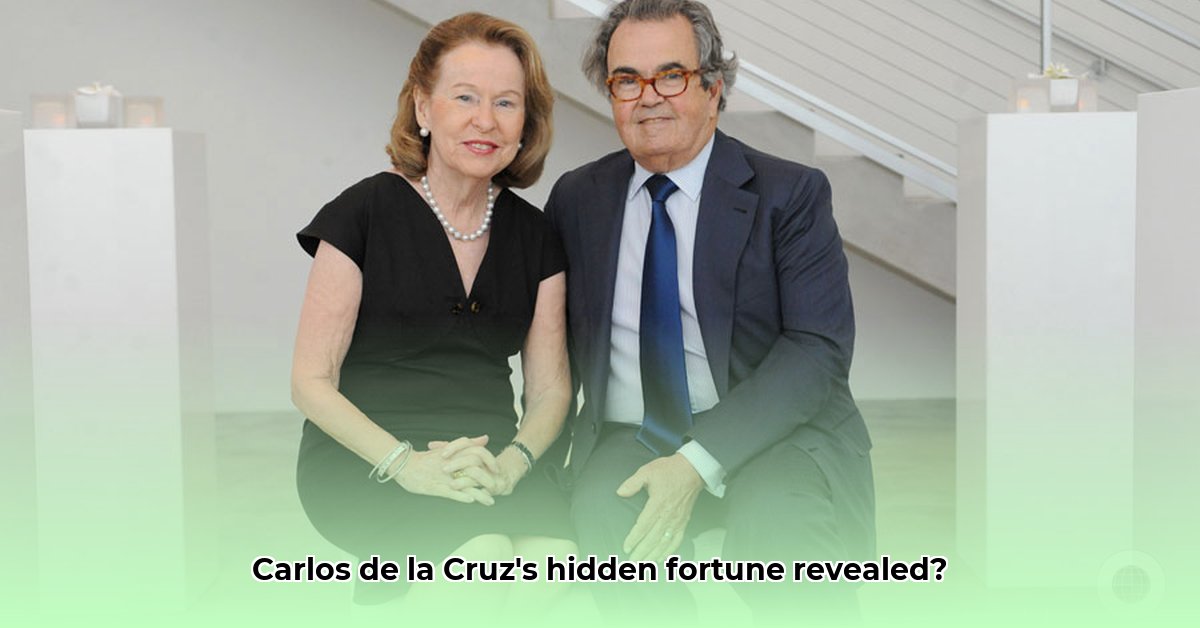
The Intricacies of Assessing Art Collection Value
The art world, a realm of passion and significant financial investment, presents unique challenges when evaluating net worth. Carlos de la Cruz's collection exemplifies this complexity. Determining his net worth isn't simply a matter of adding up price tags; it requires understanding the dynamic forces shaping the art market. How does one quantify the value of a collection comprised of unique, historically significant pieces? The answer lies not just in individual artwork prices, but in broader market trends and the collector's strategic approach.
One key factor influencing De la Cruz's wealth is the dramatic increase in the value of blue-chip artworks. High-net-worth individuals, particularly from emerging economies, are driving record-breaking sales at renowned auction houses like Sotheby's and Christie's. But, is this rapid growth sustainable? Could a market correction be on the horizon? This uncertainty adds another layer of complexity to the valuation puzzle.
A Paradigm Shift: Public Engagement and Art Value
The art world is evolving. Once shrouded in secrecy, major collections, like De la Cruz's, are increasingly becoming accessible to the public through museums and philanthropic initiatives. This shift raises intriguing questions. Does public exposure affect the monetary value of a collection? Could such generosity even influence future price appreciation? The long-term implications of this trend remain a subject of ongoing debate among art market experts. "The increased transparency and public engagement could potentially increase the value of a collection as the accessibility drives value, but also bears risk," notes Dr. Anya Petrova, Art Market Specialist at the Institute for Cultural Economics.
Strategic Collecting vs. Trophy Hunting: A Tale of Two Approaches
The art collecting world is broadly divided into two camps: strategic collectors and trophy hunters. Strategic collectors, like De la Cruz seemingly is, meticulously build their holdings, prioritizing long-term appreciation over immediate status. They are akin to sophisticated investors, forecasting market trends. Conversely, trophy hunters prioritize purchasing renowned works for prestige, less concerned with financial returns. This distinction is paramount in assessing the true worth of a collection. De la Cruz's strategic approach significantly strengthens his long-term financial position compared to collectors focused solely on status symbols.
The Unquantifiable Nature of Art Value
Precisely quantifying De la Cruz's net worth is inherently difficult. Unlike traditional assets, the art market lacks a standardized pricing mechanism. Each artwork possesses unique characteristics, and its value fluctuates based on artist reputation, current demand, and broader market trends. A comprehensive evaluation would necessitate a painstaking review of his entire collection, a task of considerable scope and complexity. Furthermore, his overall wealth encompasses other investments and businesses, further complicating the assessment.
Navigating the Unpredictable Art Market: Risks and Opportunities
The art market’s future remains uncertain. While currently experiencing a boom, it’s not immune to cyclical fluctuations. Market bubbles can emerge, and legislative changes can dramatically affect prices. Moreover, ethical considerations, such as provenance research and the impact of globalization on cultural heritage, are increasingly influencing the market. These factors are significant not only for understanding De la Cruz's wealth but also for the overall health and sustainability of the art world.
Expert Perspectives on the Art Market's Trajectory
Different stakeholders hold varying perspectives on the art market's future:
| Stakeholder | Short-Term Outlook (Next Year) | Long-Term Outlook (3-5 Years) |
|---|---|---|
| Ultra-Rich Collectors | Diversification of investments, exploration of alternative assets | Sophisticated collection strategies, enhanced collaborations with museums and cultural institutions |
| Auction Houses | Increased transparency, rigorous authentication procedures | Technological advancements, expansion into emerging markets |
| Museums/Foundations | Strengthening partnerships with private collectors | Enhanced public access, improved educational programs, prioritization of ethical sourcing practices |
| Governments/Regulators | Enhanced market oversight, tax reforms | Legislation for heritage protection, infrastructural investments |
Conclusion: A Continuous Narrative
The art world's complexity underscores the challenges in definitively determining Carlos de la Cruz's net worth. While a precise figure remains elusive, understanding the market's dynamics provides valuable insight into the world of high-end art collecting. It's a story still unfolding, shaped by strategic decisions, market forces, and the ever-evolving landscape of art itself.